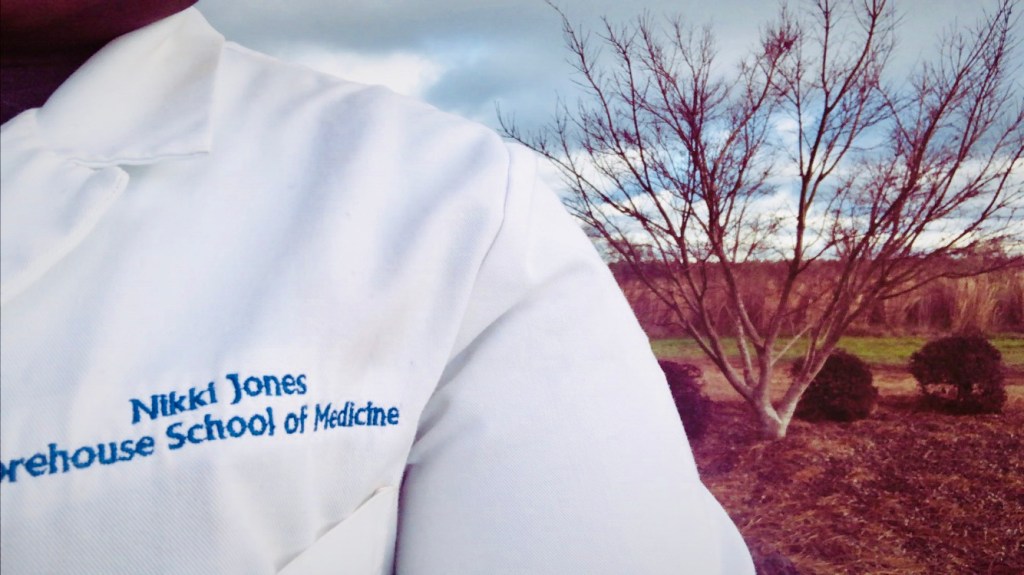
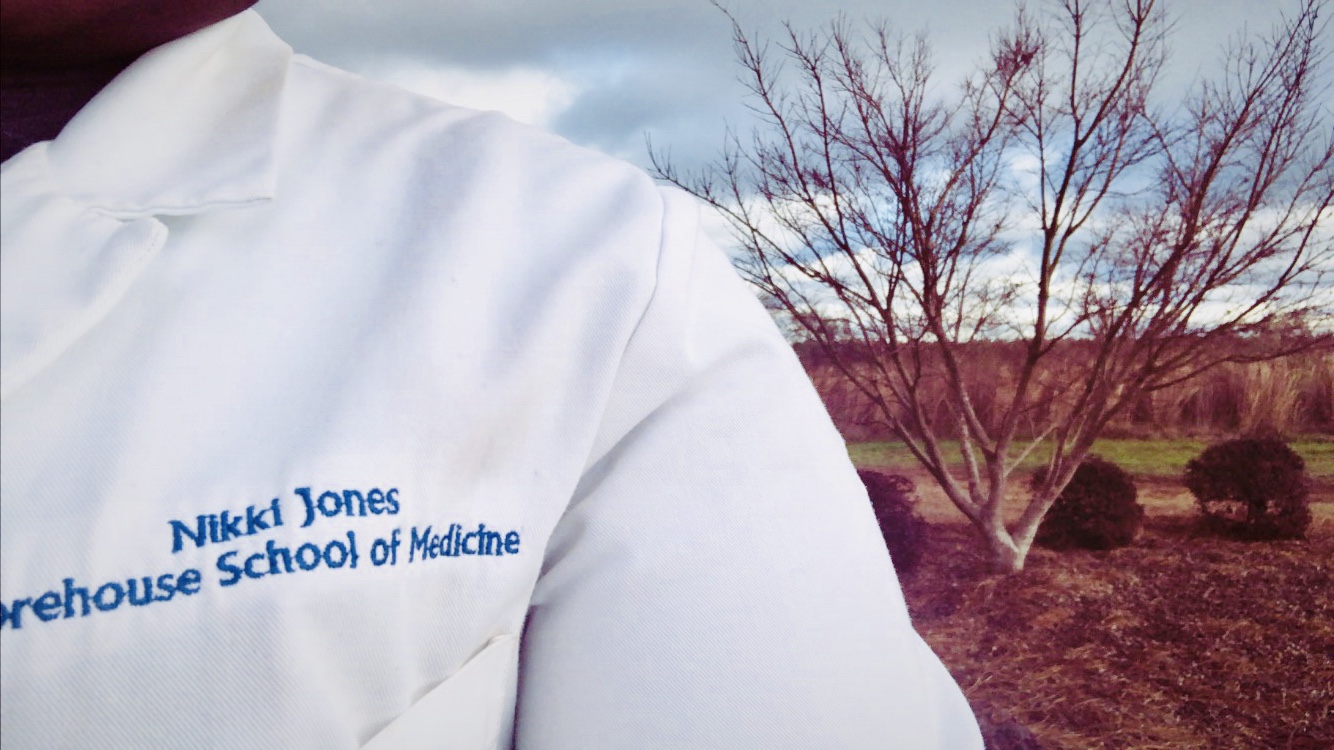
Back in December, I spent Christmas in Miami with my family. My family members from all over Florida and Georgia came down. My cousin from Albany, GA was saying how good it would be if I went there to practice medicine so they could have more black doctors. I told her about the rural medicine part of Family medicine and if I had to pick I would go to Albany.
Well, we weren’t allowed to pick where we wanted to go unless we had family in the area we were willing to stay with, but it turns out that I was chosen to go to Albany anyway.
I started my family medicine rotation and it was a little intimidating at first because family medicine encompasses everything! Young children, the elderly, pregnant women and procedural components as well. My performance in every one of my prior rotations- Surgery, Ob/Gyn and Peds was about to show. Lol.
I packed up my car and drove about 3 hours south and made it to Albany.
I knew I made it to the country when all the radio stations started to lose their signal and the majority of the stations I could find were playing country music. AHEC provided students with housing so I stayed in this 6 bedroom house. It wasn’t too far from the main hospital, Phoebe Putney. As soon as I pulled up it gave me all types of Tallahassee vibes. I went in the house and put my things down. The first thing I looked for was spiders but to my surprise there weren’t any. In the morning I could hear everyone moving around and getting ready to leave for the day but I never saw anyone in person. A whole bunch of strangers living in a house… and you’re hearing them but not seeing them. This went on for about 4 days then finally I just peaked my head out to see someone else when I heard a door open because it was getting weird lol.
I worked with an amazing family medicine physician, Dr. Satchell. He was extremely kind and patient with me. He showed me how to use the EMR system and trusted me to see my own patients from day one.
I saw my own patients, wrote the HPI, did the physical exam, ordered the diagnostics studies, refilled prescriptions and/or made new prescriptions and updated their charts by the end of their visit. This was the first time I really felt like a doctor…I had full ownership of my patients.
After the encounter, I would present to Dr. Satchell, he would go in and see the patient and confirm my findings and add to it if needed. I worked along side a PA student, I can’t remember her name, but we would each see a patient then tag the other one in when someone new came in. Sometimes the days were long but I felt good at the end of the day. One of the best parts of working at the clinic was FREE FOOD. I’m talking breakfast and lunch. Pharmacy companies would come in to discuss a new drug they were pushing on the market and the entire staff benefited from their tactics of free food for a buy in. I would go in and smile, sign my name, grab a plate, talk about the current drugs I knew for that diagnosis, say “Now that’s interesting!”….and walk away satisfied. Because of this and my fitness goals I set for the new year, I worked out everyday at the Planet Fitness in Albany in the evening. lol.
The second week I started working with one of the 4th years at my school, Girgis! At least I knew I wasn’t living in the house with all strangers, there were 2 people from MSM there too. He gave me advice on how to approach 4th year and he just made the last week in Albany even more enjoyable. He’s a full fledged doctor now tho, shout out to EM.
So when I thought of going somewhere “rural”, I really thought it was going to be out in nowheres land- Barely having reception, surrounded by greenery and tall trees and having to travel miles just to get to a grocery store. Albany wasn’t like that at all. It was just a smaller city than what I’m used to. There were still major chain stores and restaurants in the city, it was just probably one of each. Traffic was awesome, I could get anywhere within 5-10 minutes. One time I made it to the nursing home in 2 minutes. 🙌🏾 I got plenty of sleep and didn’t feel rushed to do anything. It was a great 2 weeks.
Along with working in the clinic, I also worked with Dr. Satchell to see patients in nursing homes. You would think it would be a simple check in but every patient encounter was so different and you would never know what you’re walking into.
I went from seeing a patient after getting a coronary artery bypass surgery to another patient within hours of being discharged after having DKA (Diabetic Ketoacidosis). Another time I saw a patient who had just been stabbed in the chest 😲 to having my first patient with a psychiatric condition with suicidal ideations. It definitely kept me on my toes and alert when walking into any patient room.
Family medicine was good, I developed a level of comfort within the specialty. It came really close to pediatrics but I still chose pediatrics because although with family medicine you get to experience multiple areas of medicine, there were just some parts I wasn’t comfortable with seeing. I had an older patient come in with dementia. It was the first time I did a full Mini-Mental status exam. He was having a lot of difficult just getting halfway through it but his wife kept pushing him to finish it so she could know where his cognition was to date. After he finished the exam, he wiped his nose with a tissue them proceeded to clean the counter with it…his cognition and orientation was on the lower end. After we finished, I noticed he coughed all throughout the encounter so I asked how long it had been going on. His wife said quite sometime and that she noticed he lost a lot of weight. In med student land… an older patient with unintentional weight loss and chronic cough means consider cancer. I told Dr. Satchell about it and he sent the patient for a chest x-ray. While he went for the x-ray, I continued to talk to his wife about increasing his dose of medications and adding another one to help with his dementia. I left back out to go with Dr. Satchell to review his chest x-ray and sure enough there was a large mass in his right lung. We gave him a referral to see a pulmonologist before he left. Another time, a patient we had just seen in the nursing home passed away that following week. I can’t imagine being a patient’s physician throughout the span of the vast majority of their life and then also being the one to sign their death certificate. They usually say when someone has an issue with death and dying it’s because they have not confronted their own fears about it. Which is probably true for me. When someone grieves, I really feel for them and it ends with me crying and grieving along with them. I internalize a lot. I will see death at some point in my career but I just don’t know how comfortable I am with seeing it so often. Another part that was hard for me to deal with was the depression that came along with worsening chronic conditions and developing an illness in old age. It’s like all we could do was treat the disease, provide support and hope for the best. For some, our interventions will help them live longer with a good quality of life. For others, when interventions don’t help, you watch them go through all the stages of a disease until the end. That’s too much for me.
I will say I still enjoyed my experience. I enjoyed counseling my patients and really taking the time to explain to them the physiology behind their conditions so they could have a better understanding of what’s going on int their bodies. It motivated them to take better care of themselves. I loved giving them the side eye when they tried their best to convince me that they only ate a cookie every now and then when they’re Hb A1C was 9. So I would explain to them what the Hb A1C really shows us and then convincing them to eat a healthier diet and exercise. I did this through motivational interviewing though, so I could meet them where they were to create a plan that works.
Here’s a little info about rural health in Georgia:
The National Center for Health Statistics included a rural-urban comparison in its Healthy People series report which found that residents of counties on the borders of large metropolitan areas generally are ranked highest for health indicators. Indicators of health, healthcare use, and healthcare resources can differ by level of urbanization.
While primary care physicians are in short supply everywhere in the country, the lack of providers in rural settings is more acute. Provider shortages are associated with delayed healthcare seeking, reduced continuity of care, increased travel burdens, higher healthcare costs, poorer prognoses, and poorer adherence to care plans.

Albany was hit the hardest by COVID-19 in the entire state of Georgia. So if major cities -> with access to care were hit hard by the pandemic, you can only imagine what it was like for cities with healthcare shortages.
I did not work in Albany during the pandemic. I spoke with Dr. Satchell the other day and I’m happy to hear they are recovering but I know the community there will never be the same. Well, that’s much like everywhere, it’s going to be a “new normal” for everyone after this. I just hope that other students are able to experience rural medicine like I did, and I look forward to helping out in January 2021 an elective in rural medicine.
-Future Dr. Jones
 Pretty Nerdy Doc